



5-HT Receptor
Serotonin Receptor; 5-hydroxytryptamine Receptor
5-HT receptors (Serotonin receptors) are a group of G protein-coupled receptors (GPCRs) and ligand-gated ion channels (LGICs) found in the central and peripheral nervous systems. Type: 5-HT1, 5-HT2, 5-HT3, 5-HT4, 5-HT5, 5-HT6, 5-HT7. They mediate both excitatory and inhibitory neurotransmission. The serotonin receptors are activated by the neurotransmitter serotonin, which acts as their natural ligand. The serotonin receptors modulate the release of many neurotransmitters, as well as many hormones. The serotonin receptors influence various biological and neurological processes such as aggression, anxiety, appetite, cognition, learning, memory, mood, nausea, sleep, andthermoregulation. The serotonin receptors are the target of a variety of pharmaceutical drugs, including many antidepressants, antipsychotics, anorectics,antiemetics, gastroprokinetic agents, antimigraine agents, hallucinogens, and entactogens.
5-HT Receptor Isoform Specific Products
-
5-HT Receptor
(557)
View all products
-
5-HT1 Receptor
(454)
View all products
-
5-HT2 Receptor
(475)
View all products
-
5-HT3 Receptor
(31)
View all products
-
5-HT4 Receptor
(16)
View all products
-
5-HT5 Receptor
(13)
View all products
-
5-HT6 Receptor
(86)
View all products
-
5-HT7 Receptor
(88)
View all products
All Product Categories
-
5-HT Receptor Inhibitors
(193)
View all products
-
5-HT Receptor Agonists
(545)
View all products
-
5-HT Receptor Antagonists
(679)
View all products
-
5-HT Receptor Activators
(18)
View all products
-
5-HT Receptor Modulators
(95)
View all products
-
5-HT Receptor Inducers
(2)
View all products
-
5-HT Receptor Controls
(19)
View all products
-
5-HT Receptor Ligands
(30)
View all products
-
5-HT Receptor Related Products (1728)
Related Products (1728)

-
Antibodies (1)
-
Related Compound Screening Libraries (1)
-
5-HT Receptor Isoform Comparison
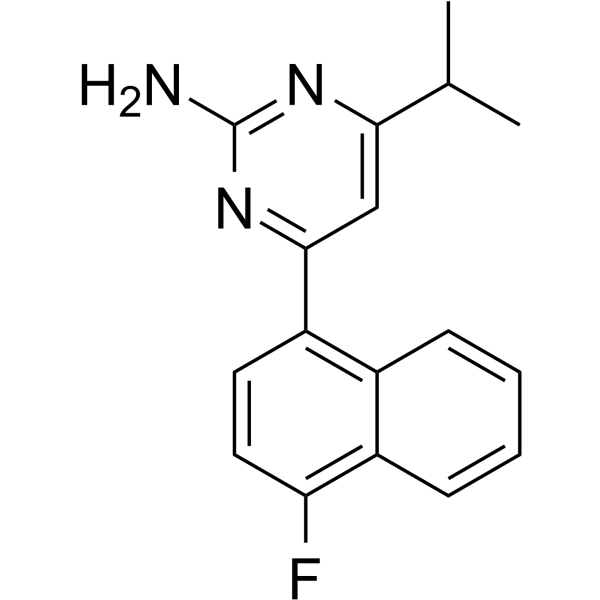
-
Sumatriptan succinate
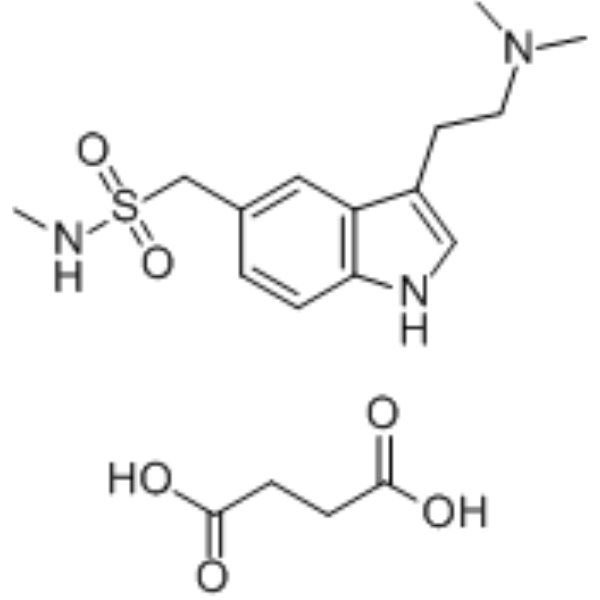 0 ImagesSynonyms: GR 43175 succinateSumatriptan succinate (GR 43175) is an orally active 5-HT1 receptor agonist with IC50s of 7.3 nm, 9.3nm and 17.8 nm for 5-HT1D, 5-HT1B and 5-HT1F receptors, respectively. Sumatriptan succinate can be used for migraine headache research.
-
Cyproheptadine hydrochloride
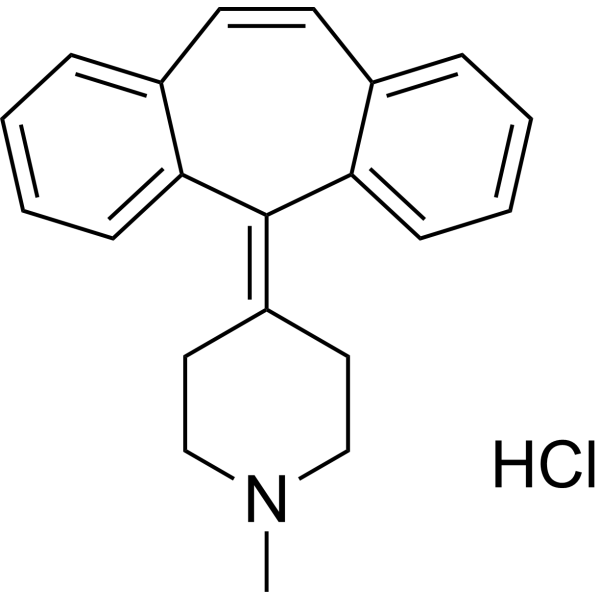 0 ImagesCyproheptadine hydrochloride (Cyproheptadine HCl) acts as a p38 MAP kinase activator, CHK2 activator, histamine H1 receptor inhibitor and serotonin receptor inhibitor. Cyproheptadine hydrochloride mediates cell cycle arrest via G1 phase arrest, G1/S transition arrest, G0/G1 phase arrest, reduced expression of cyclins D1/D2/D3, upregulated expression of HBP1, p16, p21, p27, and decreased phosphorylation of retinoblastoma protein. Cyproheptadine hydrochloride induces Apoptosis by increasing PARP and cleaved PARP, as well as activating the mitochondrial caspase pathway. Cyproheptadine hydrochloride inhibits tumor growth with extremely low toxicity to normal cells. Cyproheptadine hydrochloride can be used in research related to hepatocellular carcinoma, multiple myeloma and acute myeloid leukemia.
-
S1RA hydrochloride
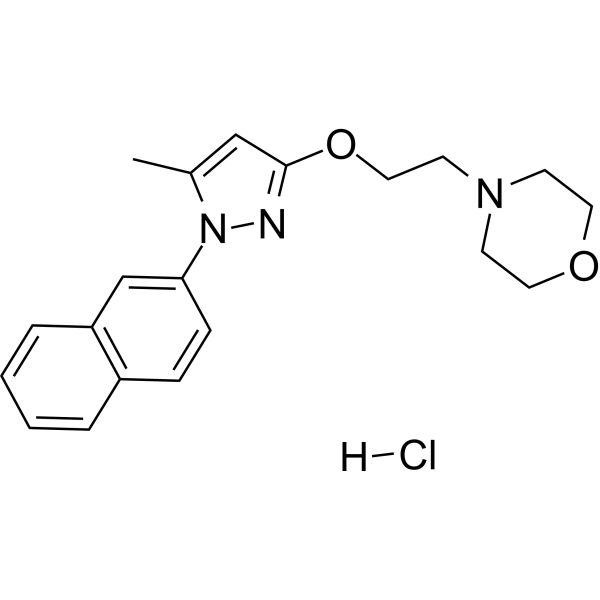 0 ImagesSynonyms: E-52862 hydrochlorideS1RA (E-52862) hydrochloride is an orally active and selective sigma-1 receptor (σ1R) antagonist with a Ki value of 17 nM. S1RA hydrochloride shows good selectivity against σ2R (Ki >1000 nM). S1RA hydrochloride is a human 5-HT2B receptor antagonist with an IC50 value of 4.7 μM. S1RA hydrochloride inhibits neuropathic pain and activity-induced spinal sensitization.
-
Flibanserin
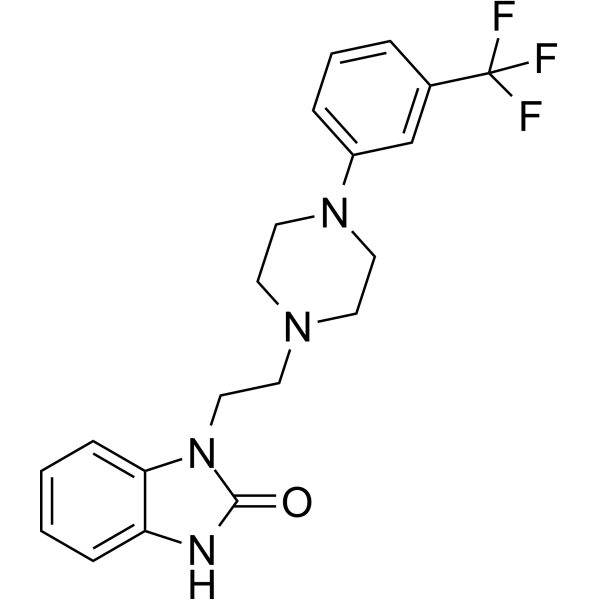 0 ImagesSynonyms: BIMT-17; BIMT-17BSFlibanserin (BIMT-17; BIMT-17BS) is an orally active serotonin 5-HT1A receptor agonist and 5-HT2A receptor antagonist with Ki values of 1 nM and 49 nM, respectively. Flibanserin binds to dopamine D4 receptors with an Ki value of 4-24 nM. Flibanserin shows anti-depression and anti-anxiety effect, can be used to hypoactive sexual desire disorder (HSDD) research-.
-
Mosapride citrate
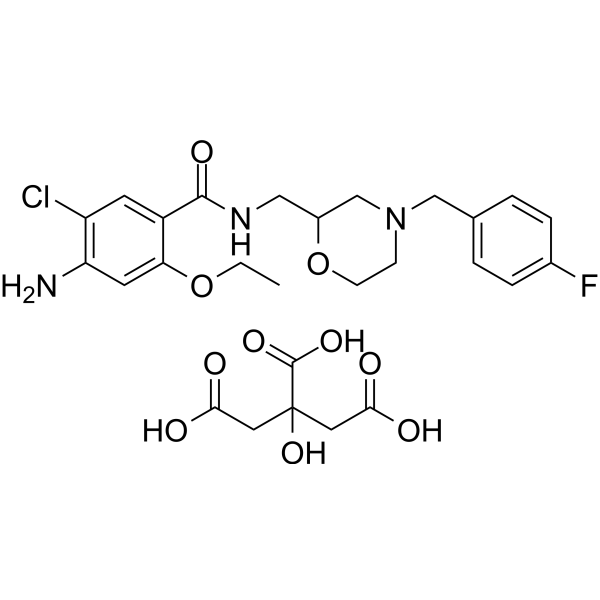 0 ImagesSynonyms: TAK-370 citrate; AS-4370 citrateMosapride citrate is an orally active gastroenterokinetic compound. Mosapride citrate is a 5HT4 agonist. Mosapride citrate is a CYP inducer. Mosapride citrate has a concentration-dependent inhibitory effect on Kv4.3, and its IC50 value is 15.2 μM. Mosapride citrate can be used in the study of gastrointestinal diseases.
-
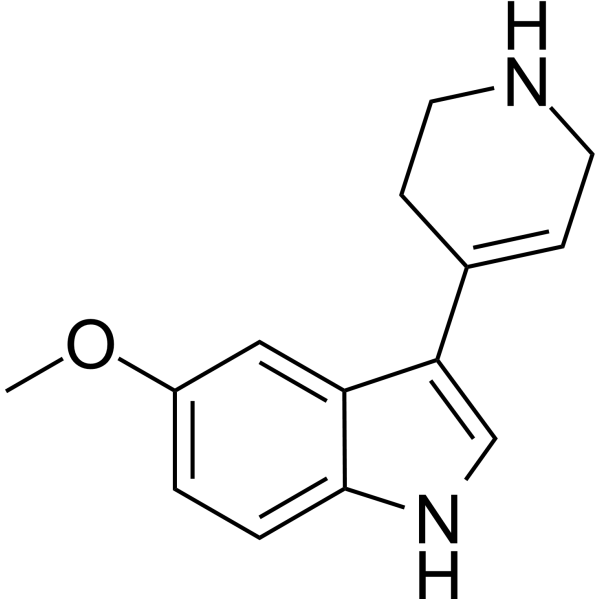
CP94253 hydrochloride
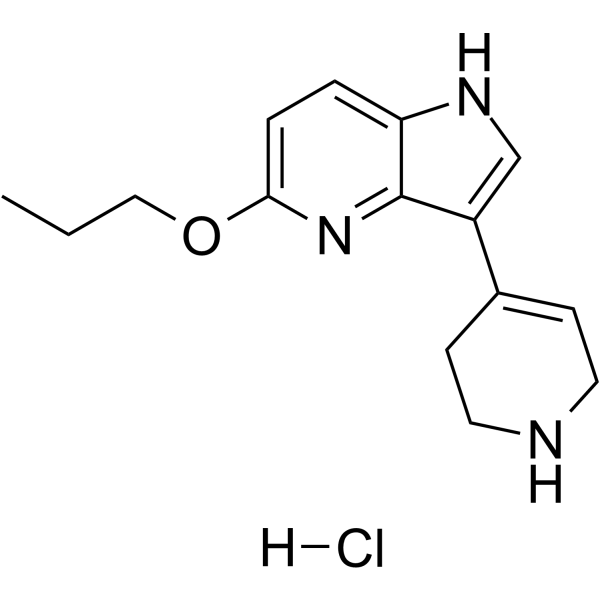 0 ImagesCP94253 hydrochloride is an orally active, brain-penetrant and selective 5-HT1B receptor agonist with an Ki of 2 nM. CP94253 hydrochloride induces antidepressant-like effects, waking enhancement, sleep inhibition, increased sleep latency, hyperlocomotion, and suppressed aggressive behavior. CP94253 hydrochloride can be used for the research of depression and heightened aggressive behavior.
-
FFN246
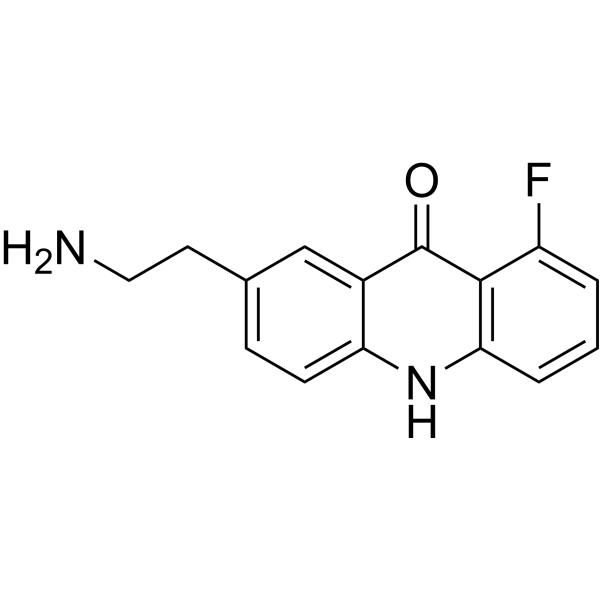 0 ImagesFFN246 is a fluorescent, dual substrate of serotonin transporter (SERT) probe and vesicular monoamine transporter 2 (VMAT2) with excitation and emission spectra 392/427 nm. FFN246 can be used for labeling serotonergic neurons in mouse brain tissue through SERT-dependent accumulation.
-
Spadin
 0 ImagesSpadin, a natural peptide derived from a propeptide released in blood, is a potent TREK-1 channel blocker with IC50 value of 10 nM. Spadin enhances dorsal raphe nucleus 5-HT neurotransmission in mice and induces hippocampal CREB activation and neurogenesis. Spadin can be used for antidepressant research.
-
Xanthotoxol
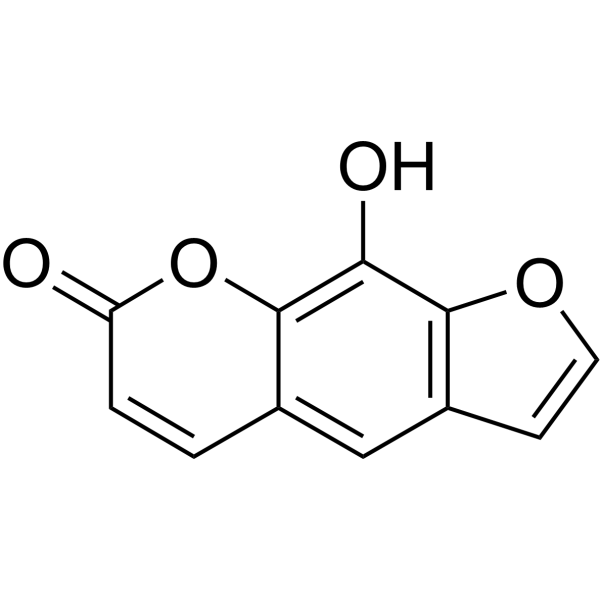 0 ImagesXanthotoxol (8-Hydroxypsoralen) It is a kind of fragrant bean substance, and it is a CYP450 inhibitor. Xanthotoxol has anti-inflammatory, anti-inflammatory, and 5-HT antagonistic and protective effects. Xanthotoxol inhibited CYP3A4 sum CYP1A2 IC50s separation 7.43 μM sum 27.82 μM. Xanthotoxol can pass through MAPK and NF-κB, inhibiting inflammation.
-
Zolmitriptan
 0 ImagesSynonyms: BW-311C90; 311C90Zolmitriptan (BW-311C90; 311C90) is a 5-HT1B/1D receptor partial agonist that can cross the blood-brain barrier, with Kis of 5.01 nM, 0.63 nM, and 63.09 nM for 5-HT1B, 5-HT1D, 5-HT1F receptor, respectively. Zolmitriptan can be used for the research of migraine.
-
Ulotaront hydrochloride
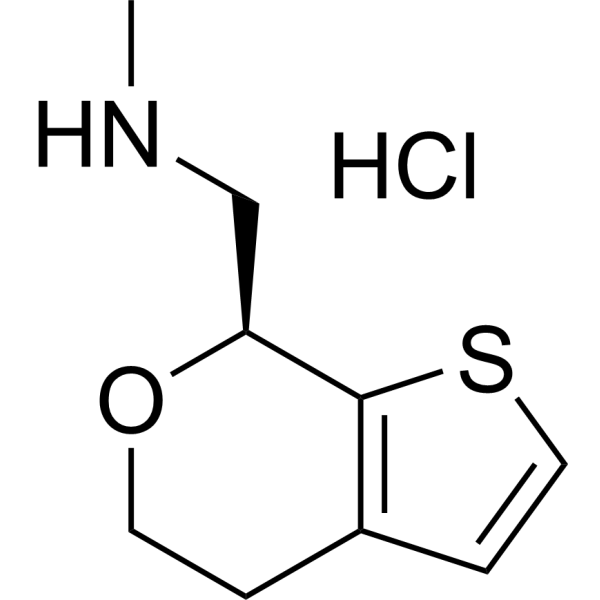 0 ImagesSynonyms: SEP-363856 hydrochloride; SEP-856 hydrochlorideSEP-363856 (SEP-856) hydrochloride, an orally active TAAR1 and 5-HT1A agonist and CNS active psychotropic agent with a unique, non-D2/5-HT2A mechanism of action, exerts its antipsychotic-like effects. SEP-363856 hydrochloride has the potential for the study of schizophrenia.
-
5-Methoxytryptamine
 0 ImagesSynonyms: O-Methylserotonin5-Methoxytryptamine, a metabolite of Melatonin, is a nonselective 5-HT receptor agonist. 5-Methoxytryptamine has no affinity for the 5-HT3 receptor. 5-Methoxytryptamine is also a potent antioxidant and has radioprotective action.
-
Oxatomide
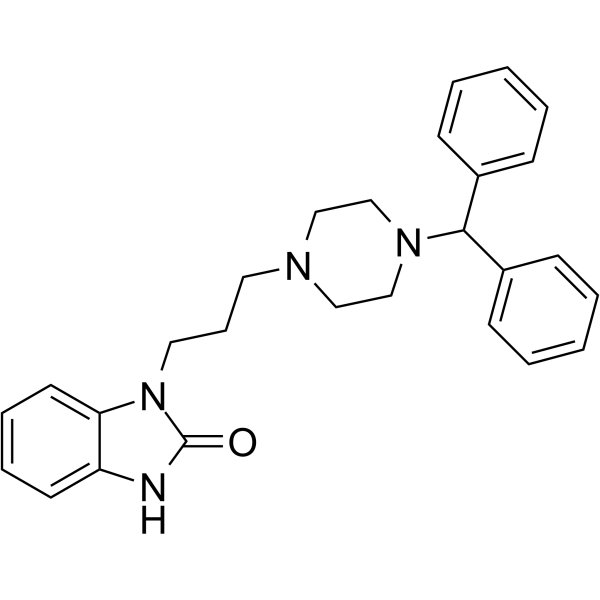 0 ImagesSynonyms: KW-4354Oxatomide (KW-4354) is an orally active dual antagonist of the H1-histamine receptor and the P2X7 receptor, as well as an inhibitor of serotonin. Oxatomide possesses antihistaminic, antiallergic and anti-inflammatory activities. Oxatomide can be used in the research of allergic diseases.
-
IHCH-7086
 0 ImagesIHCH-7086 is a blood-brain barrier-permeable, partial β-arrestin-biased agonist of 5-HT2AR with a Ki of 12.59 nM. IHCH-7086 blocks D-lysergic acid diethylamide-induced head-twitch response in mice and alleviates depression-like behaviors in mice subjected to acute restraint stress or injected with Corticosterone (HY-B1618). IHCH-7086 is applicable to research related to depression.
-
Flibanserin hydrochloride (propan-2-ol) hydrate
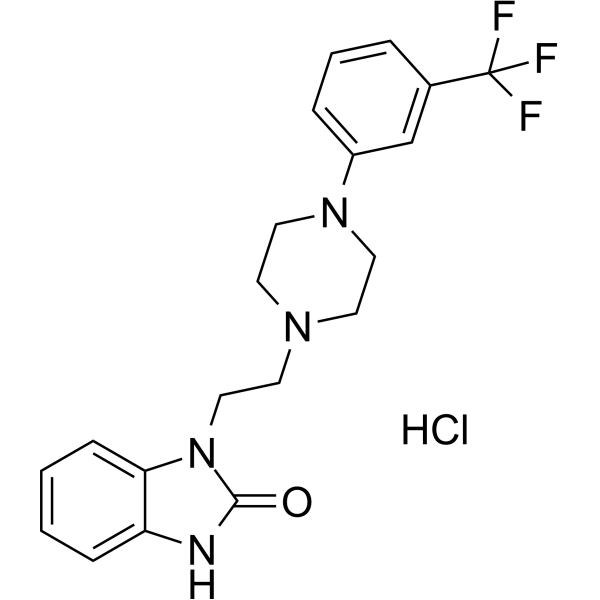 0 ImagesCat. No.: HY-A0095APurity: 99.04%Synonyms: BIMT-17 hydrochloride (propan-2-ol) hydrate; BIMT-17BS hydrochloride (propan-2-ol) hydrateFlibanserin (BIMT-17) hydrochloride (propan-2-ol) hydrate is an orally active serotonin 5-HT1A receptor agonist and 5-HT2A receptor antagonist with Ki values of 1 nM and 49 nM, respectively. Flibanserin hydrochloride (propan-2-ol) hydrate binds to dopamine D4 receptors with an Ki value of 4-24 nM. Flibanserin hydrochloride (propan-2-ol) hydrate shows anti-depression and anti-anxiety effect, can be used to hypoactive sexual desire disorder (HSDD) research-.
-
Nefazodone hydrochloride
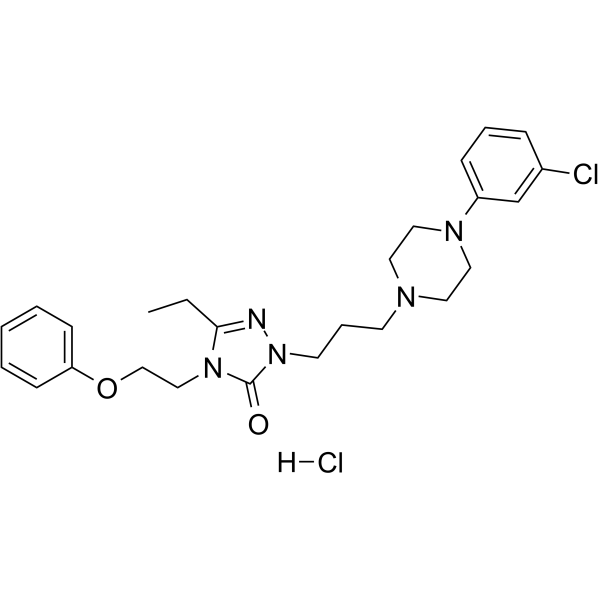 0 ImagesSynonyms: BMY-13754; MJ-13754-1Nefazodone hydrochloride (BMY-13754) is a potent and selective 5HT2A (Ki=5.8 nM) antagonist with moderate inhibition of 5-HT and noradrenaline uptake (IC50 of 290 and 300 nM, respectively). Nefazodone hydrochloride is a phenylpiperazine antidepressant with less alpha-adrenergic blocking activity.

-
Iloperidone
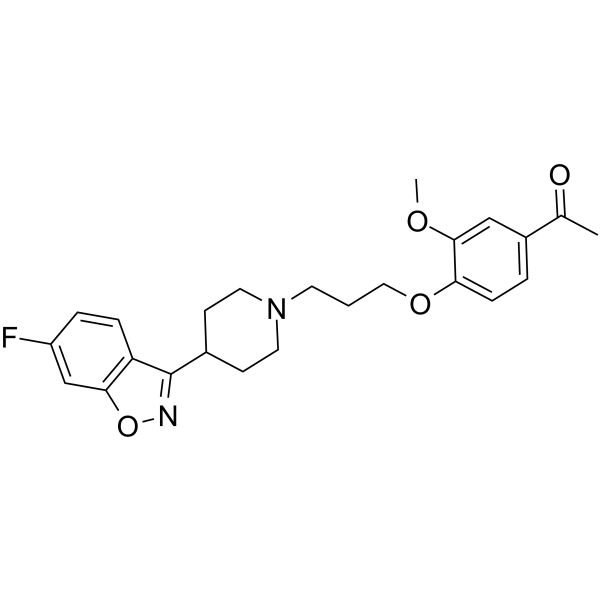 0 ImagesSynonyms: HP 873Iloperidone (HP 873) is a D2/5-HT2 receptor antagonist. Iloperidone is an atypical antipsychotic for the schizophrenia symptoms.




